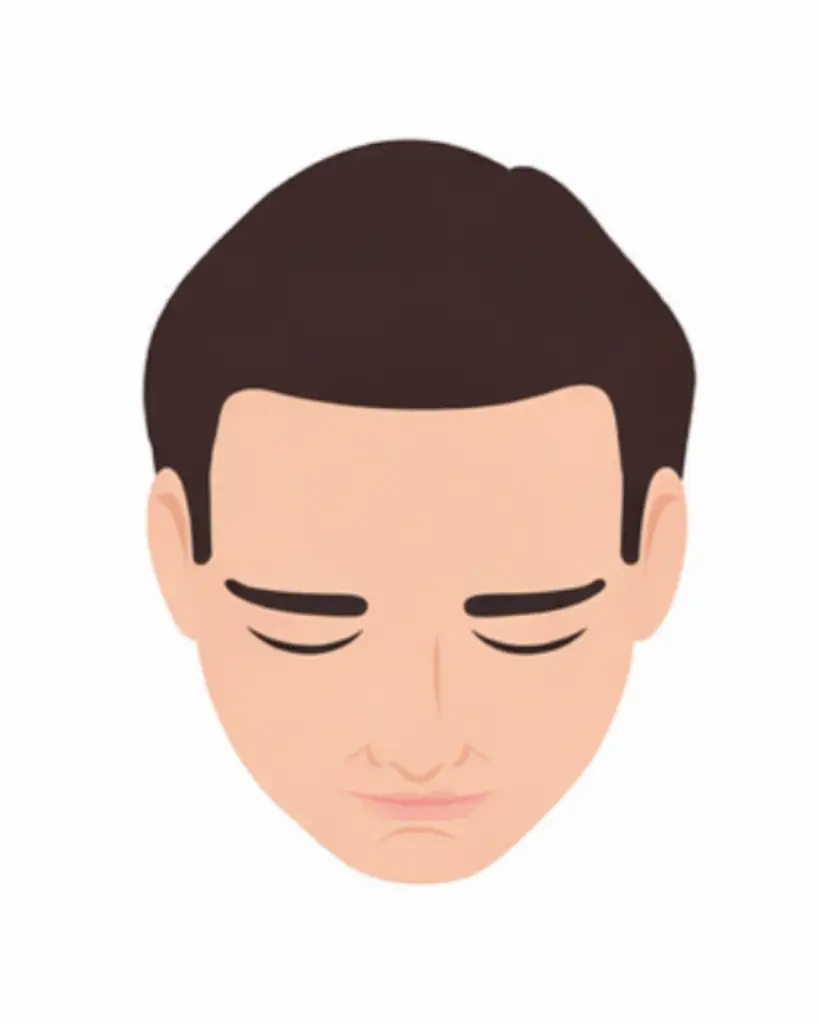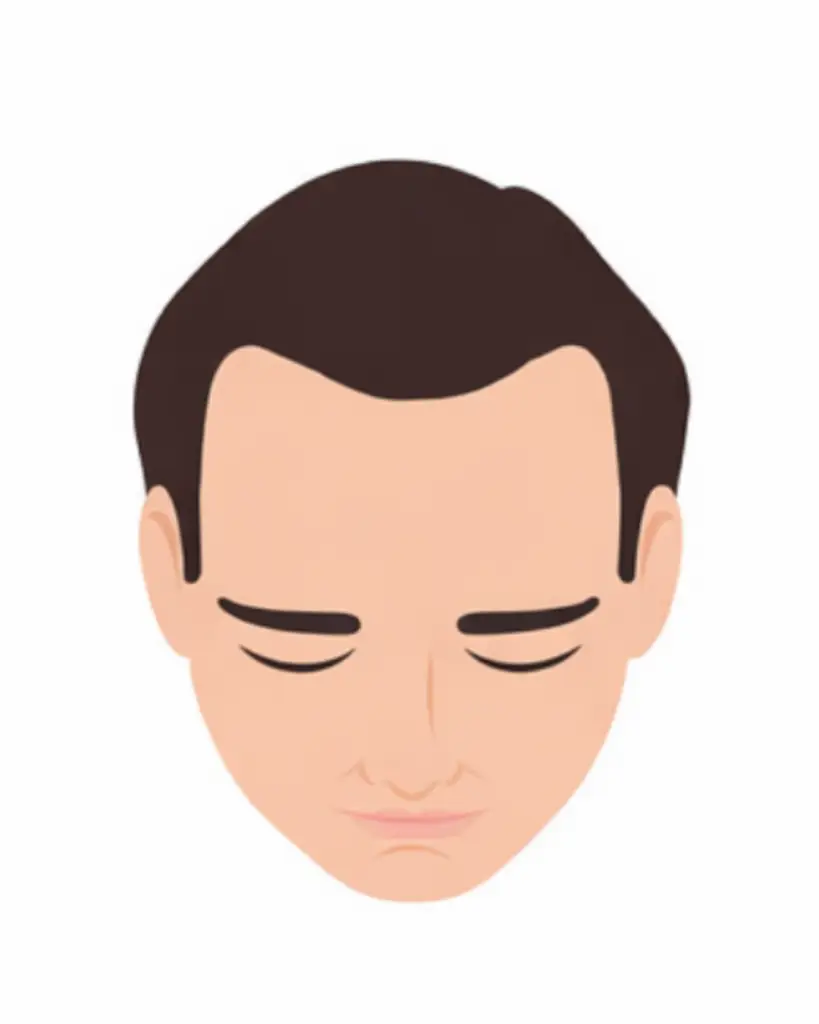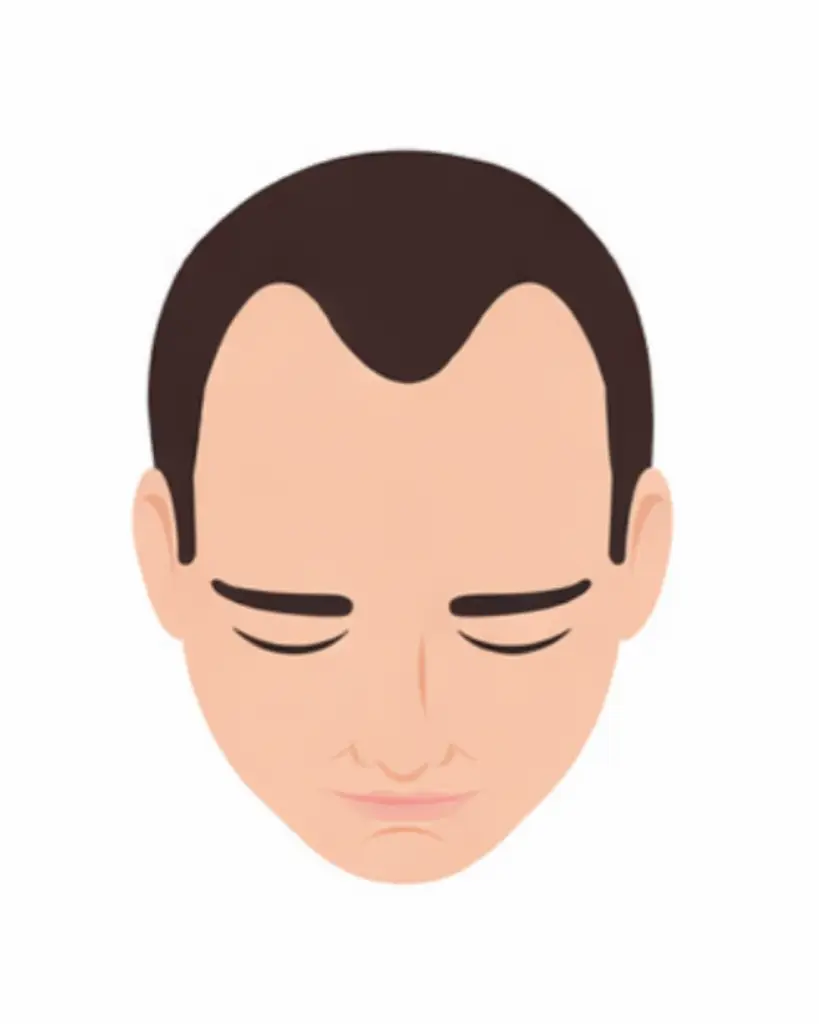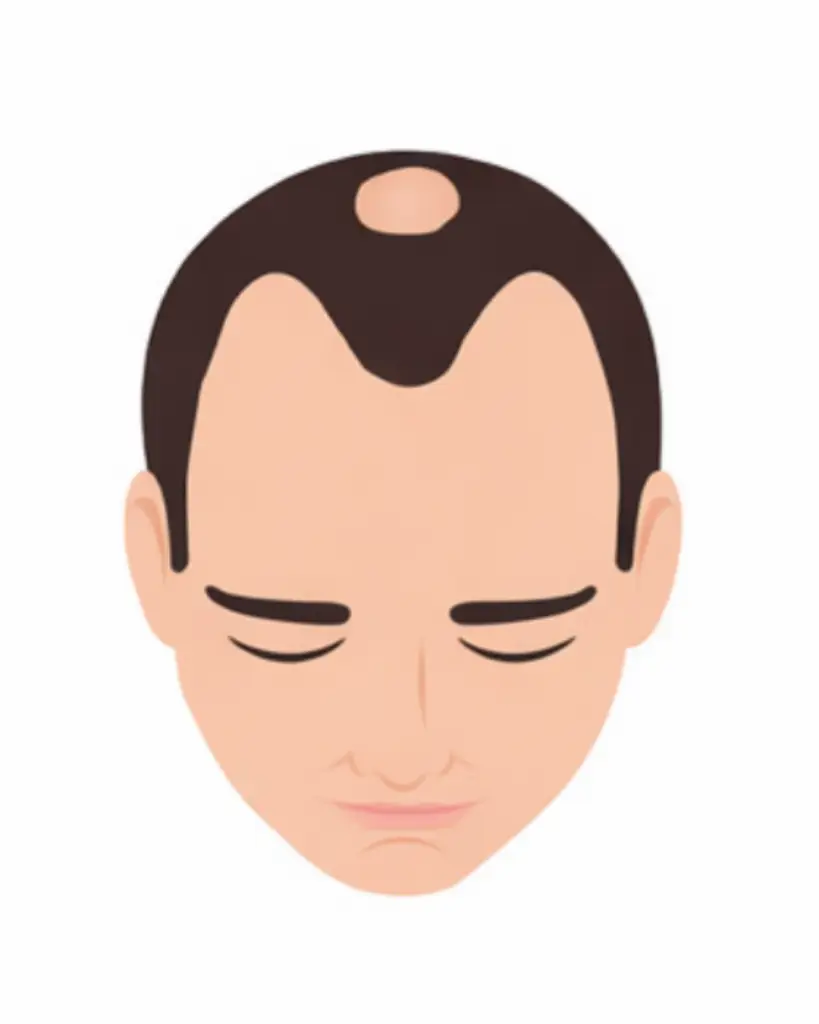

Non-surgical solutions for hair loss
Hair loss, whether linked to androgenetic alopecia, hormonal causes, deficiencies, or stress, can be slowed down or compensated for by several non-surgical solutions.
These approaches aim to stabilize loss, stimulate regrowth, or visually correct density, without resorting to a transplant.
They can be medical, aesthetic, or cosmetic, depending on the stage of alopecia and the patient’s expectations.
1. Drug treatments
Drug treatments aim to slow the progression of hair loss and preserve the hair still present.
They act on the hair growth cycle or on the hormonal mechanisms responsible for its miniaturization.
Minoxidil
Minoxidil is an anti-hair loss treatment used in topical application, in the form of foam or solution, to be applied directly to the scalp.
It also exists in oral form; however, this use is considered an off-label treatment in France.
Minoxidil works by improving microcirculation around the hair follicles and extending the growth (anagen) phase of the hair.
It can be prescribed to both men and women and requires daily application to maintain its effectiveness.
This treatment is particularly useful in early-stage alopecia, where it helps slow down loss and sometimes partially redensify the hair.
Note: stopping the treatment generally leads to the progressive resumption of hair loss.
Finasteride
Finasteride is an oral treatment, reserved for men. It also exists in a topical spray form, which can be offered as an alternative for certain patients.
Finasteride works by inhibiting the conversion of testosterone into DHT (dihydrotestosterone), the hormone responsible for the progressive miniaturization of the follicle in androgenetic alopecia.
It thus helps to stabilize the progression of baldness and, in some cases, achieve partial regrowth.
This treatment requires medical supervision and is not suitable for all patients.
Other possible medical treatments
Depending on the case, other approaches may be considered:
- Dutasteride (a molecule similar to finasteride, sometimes used in local injections),
- adapted hormonal treatments for women,
- nutritional supplementation (B vitamins, iron, zinc, sulfur amino acids).
2. Local stimulation treatments
These methods aim to reactivate weakened follicles and improve vascularization of the scalp.
PRP (Platelet-Rich Plasma)
The PRP procedure involves taking a blood sample from the patient, centrifuging it to extract plasma concentrated in platelets, and then reinjecting it into the scalp.
The growth factors contained in PRP promote hair follicle regeneration and improve vascularization.
PRP can be used alone or as a supplement to a hair transplant.
Dutasteride injections
Another approach consists of locally injecting a low dose of Dutasteride, which acts as a DHT inhibitor directly on the scalp.
The goal is to slow down hair miniaturization while limiting systemic effects.
3. Topical and cosmetic care
These solutions are accessible without a medical prescription and primarily help to improve the visual appearance of existing hair.
Stimulating lotions and serums
Certain products contain stimulating active ingredients (caffeine, peptides, keratin, vitamins, amino acids).
They aim to strengthen the hair shaft, nourish the scalp and limit breakage.
Densifying powders and hair fibers
These are electrostatic keratin fibers to be applied to the scalp to mask thinning areas.
They offer an immediate illusion of density, but it is temporary: they wash out.
Coloring sprays
Used as a supplementary solution, they darken the scalp to reduce the contrast between skin and hair, giving a visual effect of density.
4. Aesthetic and complementary solutions
Hair systems (prostheses, hairpieces, volumizers)
Hair systems are aesthetic devices fixed to the scalp or integrated into existing hair.
They allow for immediate density restoration without surgery.
Modern models, made of natural hair, are very realistic and customizable (shape, color, implantation).
It is a reversible solution without medical risk, often used in extensive alopecia where a transplant is no longer possible.
Scalp micropigmentation (trichopigmentation)
Scalp micropigmentation consists of tattooing micro-pigment dots onto the scalp to mimic the appearance of follicles.
This technique, also called trichopigmentation, gives a visual effect of density or a uniform shaved look.
It can be used:
- alone, for a “shaved hair” effect,
- or as a supplement to a transplant to visually densify the hair base.
5. Combined approaches
Often the best strategy relies on the combination of several solutions:
- drug treatment to stabilize loss,
- PRP to stimulate regrowth,
- topical care or trichopigmentation to improve visual density.
These approaches are adapted according to the stage of alopecia, the quality of the donor area and the aesthetic goals of the patient.
Many non-surgical solutions exist today to fight hair loss.
They can:
- slow down loss,
- strengthen existing hair,
- stimulate regrowth,
- or visually compensate for missing density.
These treatments are complementary, and their effectiveness depends on the initial medical diagnosis and the regularity of follow-up.
At ANAGEN, we combine our hair transplants with drug and stimulation treatments when the patient is favorable, in order to preserve existing hair and optimize overall density over time.
We answer all your questions
Do not hesitate to call us at 04 78 08 93 63 if your question is not in the list.
1. What is a hair transplant?
A hair transplant is a medical procedure that involves taking hair follicles from a donor area (often the back of the head) to reimplant them in thinning or balding areas.
Transplanted grafts retain their permanent character, allowing for definitive and natural regrowth.
2. What is the difference between FUE and FUT?
FUE (Follicular Unit Extraction) is a modern technique that allows grafts to be harvested one by one, without a visible linear scar.
FUT (Follicular Unit Transplantation), which is older, involves a surgical strip taken from the back of the head.
FUE is today the most used method for its precision and scar discretion.
3. Who is hair transplant for?
Hair transplant is intended for people suffering from androgenetic alopecia, mainly men between 25 and 60 years old.
A medical evaluation is necessary to check the density and quality of the donor area, as well as the stability of hair loss before considering an intervention.
4. How many grafts can be implanted in one session?
The number of grafts depends on the surface to be treated and the density of the donor area.
A session can range from 1,000 to 6,000 grafts, spread over one or two days depending on the clinical case.
The practitioner determines the most suitable strategy after the diagnosis.
5. Is the procedure painful?
FUE hair transplant is performed under local anesthesia.
The patient is conscious and relaxed throughout the procedure.
Discomfort may be felt after the intervention, but it disappears in a few days with the prescribed care.
6. When does transplanted hair grow back?
Regrowth follows several natural stages:
- Temporary loss of grafts between 2 and 4 weeks after the transplant,
- Start of regrowth around the 3rd or 4th month,
- Visible result at 6 months,
- Final result between 9 and 12 months after the intervention.
Each patient progresses at their own pace.
7. Does hair transplant leave scars?
The FUE technique leaves no linear scar.
Micro-traces may be visible on the donor area for the first few days, but they disappear quickly.
Good healing depends on following post-operative instructions.
8. Does transplanted hair fall out again?
Implanted hair comes from areas genetically programmed not to fall out.
They retain this characteristic after the transplant.
However, non-transplanted hair may continue to thin: regular medical follow-up helps stabilize the progression of baldness.
9. How long does a hair transplant session last?
The duration depends on the number of grafts to be implanted.
On average, a session lasts 6 to 8 hours.
For large transplants (up to 6,000 grafts), the intervention can be performed over two consecutive days.
10. What precautions should be taken after a hair transplant?
The first few days require specific care to protect the grafts:
- Gentle cleaning and thermal water spray,
- Avoid sun, sports, and wearing a cap,
- Sleep with the head slightly elevated,
- Follow the post-operative instructions given by the center.
Personalized follow-up is provided to accompany each stage of healing.